

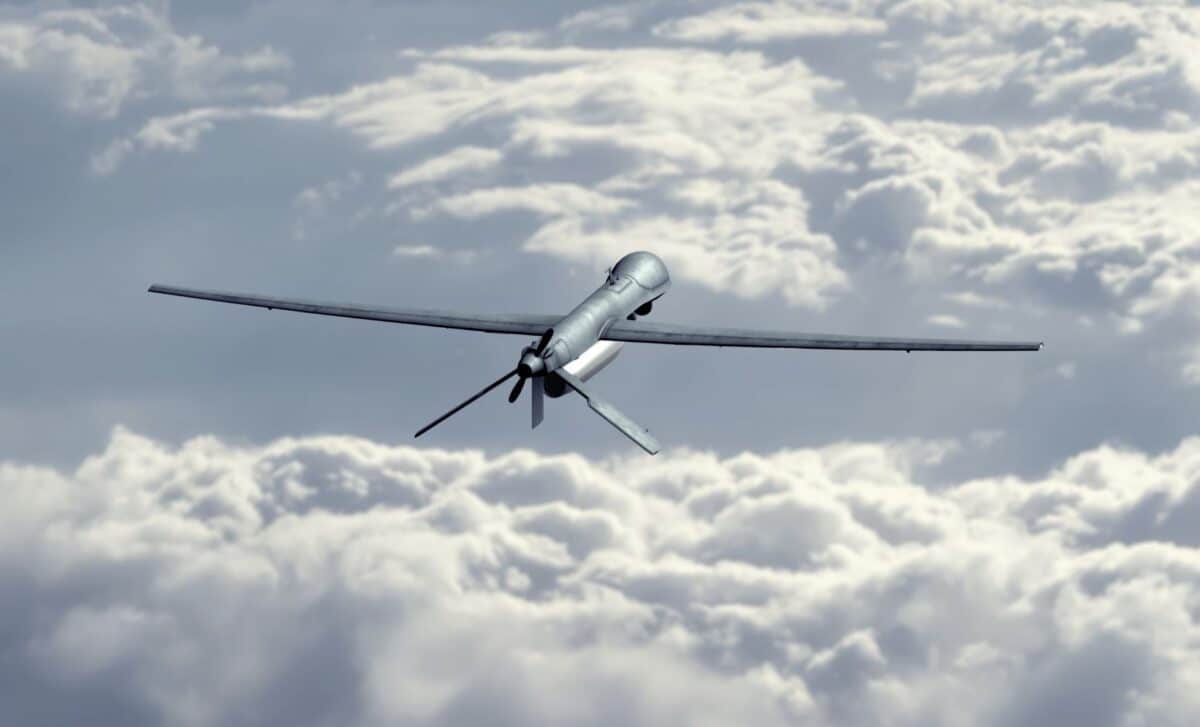
In response to the surge of drone use in modern combat, the UK and Estonia have signed a partnership agreement. The goal of this collaboration is to develop a low-cost maritime air defense system against drones.
Russian Submarine Joins Forces to Protect Controversial Oil Tanker from US Seizure
A New Anti-Drone Defense System?
In light of the increasing attacks by one-way drones, the agreement between British company Babcock and Estonian company Frankenburg Technologies represents a concerted industrial effort to enhance maritime air defense against drones. This partnership combines naval expertise with technological innovation to tackle a central operational challenge in contemporary conflicts.
These low-cost, hard-to-detect devices expose ships and coastal platforms to unpredictable asymmetric attacks. To address this challenge, Babcock, a UK specialist in maritime launch systems, has partnered with Frankenburg Technologies, an Estonian company focused on lightweight missiles for defense against unmanned aerial systems.
The priority of this collaboration is the development of an innovative and affordable anti-drone air defense system tailored to the maritime domain. It uses a containerized launch system that can be quickly installed on various ships or coastal infrastructures, avoiding major modifications to existing platforms and reducing integration time.
Under the terms of the agreement, Babcock will develop the launch platform, while Frankenburg will provide its low-cost missiles, which are quickly manufactured and optimized to effectively neutralize hostile drones.
Technical and Industrial Objectives of the Anti-Drone Air Defense System
At the heart of this collaboration are two key components: a containerized launch platform for maritime use and low-cost anti-drone missiles designed for mass production. The missiles developed by Frankenburg are produced rapidly and are intended to offer an affordable solution against low-cost drones, often used in large numbers by opposing forces.
This approach meets a strategic need: reducing the unit cost of engagements against multiple targets while increasing the volume of available effects. Traditional air defense systems are often designed to counter high-tech, expensive threats, and are not optimized to face large waves of low-cost drones. By using dedicated light missiles, this maritime anti-drone air defense system seeks to reverse the cost-effectiveness equation, which often disadvantages defenders.
From an industrial perspective, the collaboration also aims to strengthen sovereign capabilities within the European defense industry. The engineering efforts led by the UK are expected not only to create skilled jobs but also to ensure that this solution is globally exportable, meeting the needs of navies facing similar threats in various regions.