

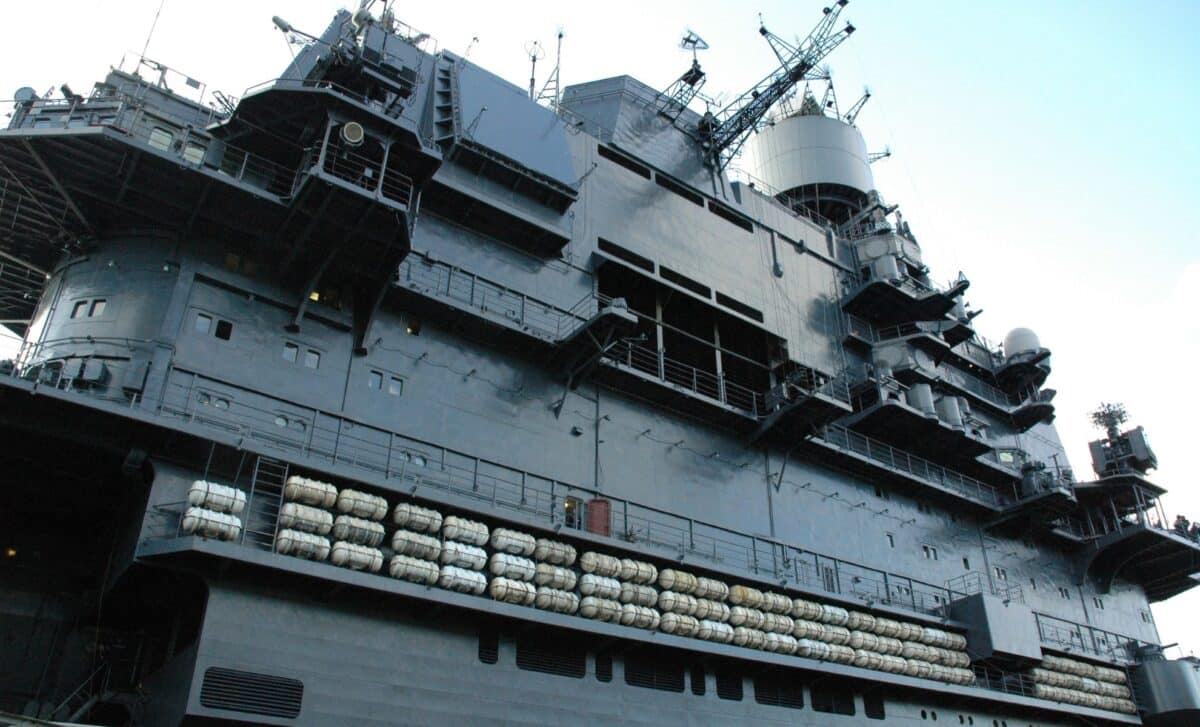
Commissioned in 1991, the Admiral Kuznetsov once stood as a floating symbol of the Soviet naval inheritance. Nearly 300 meters long and designed to operate Su-33 and MiG-29K fighters, the ship ultimately logged just one major operational deployment: Russia’s 2016 mission off Syria. The campaign ended in embarrassment, with two aircraft lost in onboard accidents—incidents that highlighted serious structural shortcomings.
Since 2017, the carrier has sat in dry dock, trapped in a grinding cycle of repairs, fires, and chronic delays, according to The War Zone. Two fires, one in 2019 and another in 2022, and the loss of its floating dry dock further slowed the overhaul. At the same time, the carrier’s aircraft fleet has aged into a poor fit for sustained shipborne operations, adding another layer to what many now view as a steadily shrinking military asset.
China Suspected in Cyberattack on US Congressional Staff Communications
A Costly Technical Dead End
The financial burden of trying to revive the Kuznetsov has become impossible to ignore. Its modernization has absorbed more than 100 billion rubles, close to one-third of the price of a new aircraft carrier. That spending is increasingly hard to defend during the prolonged war in Ukraine, where Russian military resources are being channeled primarily toward ground forces.
The question of replacement looks just as bleak. The Storm project, intended to deliver a new carrier for the Russian Navy, was quietly shelved due to a lack of funding. And no alternative carrier program is currently visible in Russian shipyards.
A Different Naval Priority
For Moscow, stepping away from the Kuznetsov is not simply the failure of one vessel, it signals a wider strategic shift. Russia, fundamentally a continental power, is placing greater emphasis on coastal defense and submarine deterrence, rather than on the long-range naval power projection that aircraft carriers are built to provide.
Former Pacific Fleet commander Admiral Sergei Avakyants has argued that carriers are increasingly vulnerable in modern warfare, warning they could be destroyed “within minutes by modern weapons.” In the Black Sea, Ukraine has showcased how relatively low-cost drones and missiles can threaten and damage Russian naval units, reinforcing that assessment.
A Downgrade that is Mostly Symbolic
Globally, Russia’s carrier dilemma also underlines its reduced standing among major naval powers. The United States operates 11 nuclear-powered aircraft carriers, China has three, and France fields the Charles de Gaulle, a contrast that leaves the Russian Navy looking outclassed.
But for Moscow, the loss is framed as largely symbolic. Russia has no overseas territories and no vast maritime sphere to sustain through carrier power. Its focus remains on defending the northern flank, where climate change is opening up new potential flashpoints, and on safeguarding its submarine bastions.