
As the Russia–Ukraine war approaches its fourth year, the conflict shows no sign of resolution. Daily developments point to a deepening stalemate, marked by intensifying attacks, civilian casualties, and diplomatic dead-ends. One recent move by Moscow has sparked particular concern in Washington.
“I Thought It Was Over” : Boeing 757 Makes Emergency Landing After Engine Fire
The Orechnik Hypersonic Missile: A Troubling New Phase
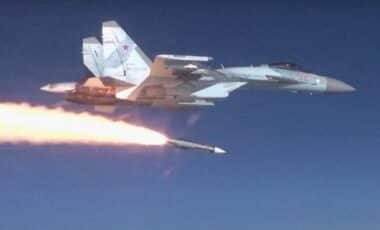
Russia has reportedly used the Orechnik, a new intermediate-range hypersonic missile, in recent strikes on Ukrainian territory. Though non-nuclear, the missile represents a major leap in strike capability. Ukrainian officials, including the SBU (Security Service of Ukraine), have confirmed its presence near Lviv, citing recovered debris.
According to the Ukrainian Air Force, the missile’s deployment appears designed to test the resolve of Ukraine’s Western partners. As stated by abc news, American spokesperson Tammy Bruce described it as a “dangerous and inexplicable escalation.
“At a moment of tremendous potential, due only to President Trump’s unparalleled commitment to peace around the world, both sides should be seeking ways to de-escalate,” she added. “Yet Russia’s action risks expanding and intensifying the war.”
International Response and Rising Tensions
The United States quickly condemned the missile strikes, raising the issue before the UN Security Council. Backed by Ukraine, Washington requested an emergency session to address what it sees as a deliberate escalation by the Kremlin.
President Zelensky urged the international community to issue a “clear and concrete response”, warning that continued passivity could embolden further aggression.
At the same time, the European Union is considering a significant step: the creation of a permanent European military force numbering 100,000 troops. The proposal, introduced by EU Defense Commissioner Andrius Kubilius, comes amid growing doubts about America’s long-term commitment to European security.
Damage on the Ground: Ukraine and Russia Hit
The latest Russian aerial attacks have had severe humanitarian and infrastructure consequences. In Kyiv, at least four civilians were killed, and damage was reported to 20 residential buildings as well as the Embassy of Qatar.
In Zaporizhzhia, electrical grid infrastructure was heavily damaged, leaving over 382,000 homes without power. In the capital, heating systems failed across nearly half of all residences, forcing officials to consider evacuating parts of the city.
Meanwhile, Ukraine struck back. A drone attack hit the Russian city of Voronezh, reportedly killing one person. Russia claims to have downed 25 drones, although the incident disrupted air traffic in Moscow.