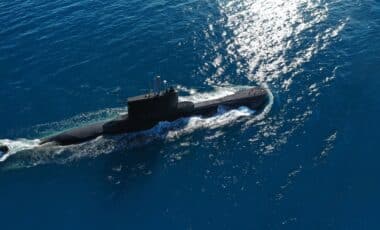

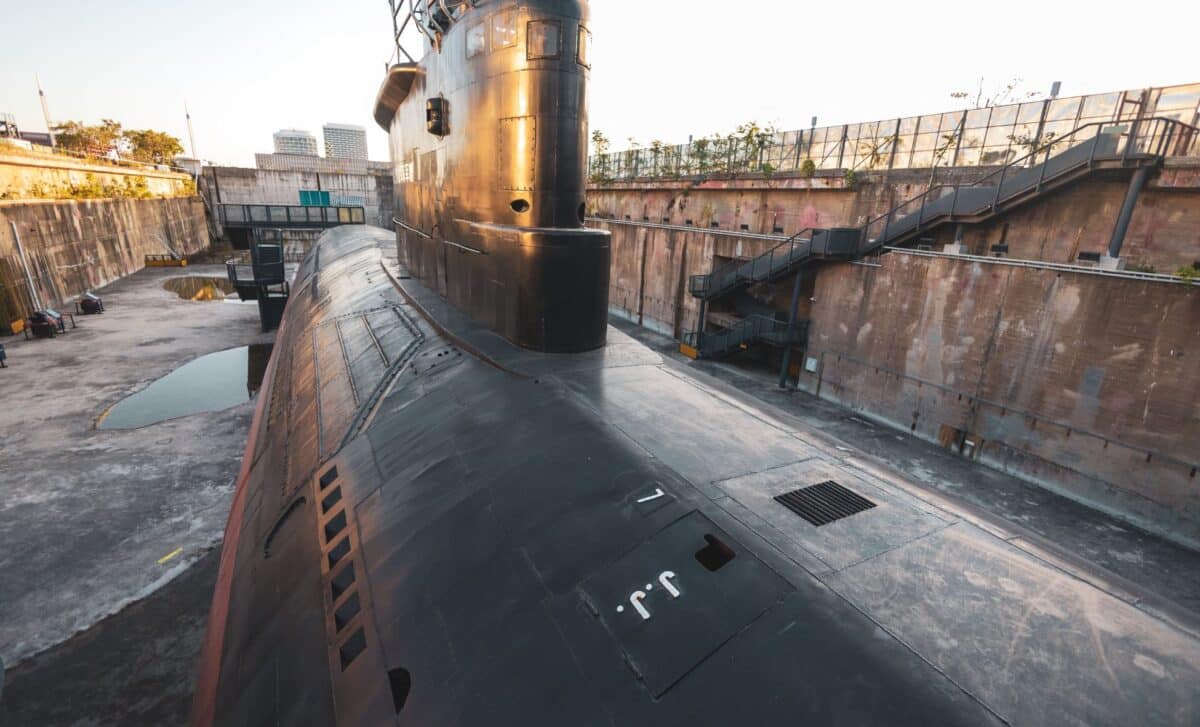
The unveiling of China’s Type 096 Tang-Class ballistic missile submarine marks a pivotal moment in the country’s naval modernization strategy. With significant advances in stealth, missile range, and operational doctrine, this new platform positions the People’s Liberation Army Navy (PLAN) to carry out extended sea-based nuclear deterrence patrols from its own territorial waters, bringing it closer than ever to parity with the United States in this critical domain.
US Peace Commitments ‘No Longer Guaranteed,’ Trump Warns in Message to Norway
Technical Advances In Stealth And Survivability
The Tang-Class submarine, first revealed by Chinese state media on January 14, 2026, features a submerged displacement of 15,000 to 20,000 tons, placing it in the same class as the Ohio-class and Columbia-class vessels of the U.S. Navy. The increased size reflects a redesign that enables quieter and longer-lasting deployments.
According to Army Recognition reports and foreign defense assessments, the new submarine is equipped with raft-mounted machinery, hull isolation systems, and a redesigned propulsion layout intended to significantly reduce its acoustic signature. Estimated sound levels in the range of 95 to 100 decibels represent a substantial improvement over earlier Chinese SSBNs, which were considered too noisy for credible open-ocean patrols.
Some experts suggest that Chinese engineers may have incorporated Russian design assistance, particularly from the Borei-class, to achieve such advances in vibration and sound damping. The resulting platform is better suited for stealth-based deterrence missions, potentially complicating U.S. and allied anti-submarine warfare operations in the Pacific.
Improved Range and Retaliation
Perhaps the most consequential upgrade is in the Tang-Class’s strategic firepower. The submarine is expected to carry 16 to 24 JL-3 submarine-launched ballistic missiles (SLBMs), each with a range of approximately 14,000 kilometers. These missiles are reportedly capable of carrying six to ten MIRVs (multiple independently targetable reentry vehicles), drastically multiplying the warheads each submarine can deliver in a single launch.
This missile range allows the submarine to target most of the continental United States directly from Chinese coastal patrol zones such as the South China Sea or Bohai Gulf, without having to cross maritime chokepoints like the Philippine Sea or Malacca Strait. This fundamentally alters the deterrence model. The PLAN now possesses the ability to maintain second-strike nuclear capability without exposing its assets to forward-deployment risks, as previously required.
The platform reflects a shift toward the continuous at-sea deterrence model long employed by the U.S. Navy, which keeps nuclear-armed submarines on patrol at all times. If operationalized effectively, China’s adoption of this doctrine would represent a significant evolution in its nuclear posture.
Fleet Expansion And Capability Gains
The Tang-Class is part of a broader trend in PLAN modernization. As reported by Military Watch Magazine, China now operates an estimated 32 nuclear-powered submarines, surpassing Russia’s active nuclear fleet. These include 14 Type 093B attack submarines, which are equipped with advanced cruise and ballistic missile systems, and nine Type 094/094A SSBNs.
Future classes such as the Type 095, currently under construction, are expected to incorporate further improvements in stealth and multi-role capability. These developments are occurring alongside high production rates and significant investment in shipbuilding infrastructure.
With U.S. shipyards facing delays and rising operational demands, analysts suggest that the longstanding undersea dominance of the U.S. Navy could erode over time. The emergence of a more capable and survivable Chinese submarine force complicates strategic calculations, particularly in regions where U.S. and Chinese naval operations already intersect.