

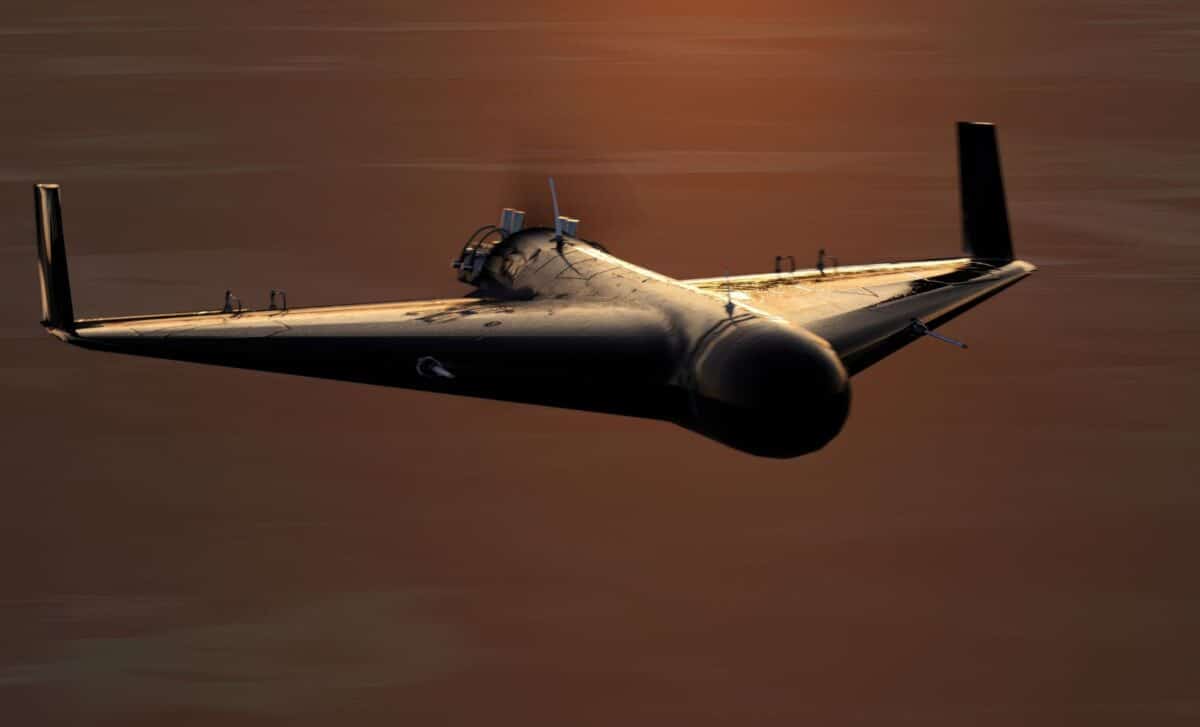
Since 2023, Ukraine has faced a growing campaign of Russian drone attacks, significantly affecting civilian life and national defense capabilities. The scale and frequency of these strikes have reached new levels, with Russia preparing to launch up to 500 drones per day, mainly using Iranian-designed Shahed drones.
Massive €2 Billion Anti-Drone Shield: Poland’s Bold Move Against Russian Threats
Russia’s Drone Capabilities Boosted By Foreign Partnerships
The intensification of Russia’s drone offensive began in early 2023, relying heavily on Shahed drones supplied through a technological alliance with Iran. According to Statista, more than 300 drones were launched in a single night on several occasions. In May 2023, Russian forces deployed approximately 4,000 drones across Ukrainian territory, a peak never previously recorded and 14 times higher than numbers observed in 2024.
This growth in capability has been enabled by international collaboration, particularly with Iran and China. While Iran provides the drone design and transfer of manufacturing knowledge, Chinese components, including motor variants, are reportedly integrated at production sites. Russia established its first Shahed production facility in Yelabuga (Tatarstan) in early 2023, which doubled in capacity by April 2025. A second site in Izhevsk has been operational since autumn 2024.
Russian forces have also developed variants such as the Geran, designed to resist electronic warfare, and the Gerbera, an unarmed model deployed in swarms to saturate defenses. These advancements point to a strategic emphasis on volume and system saturation over precision.
Pressure On Ukrainian Air Defenses
The increase in drone strikes has placed considerable strain on Ukraine’s air defense network. Initial success in intercepting long-range drones, once estimated at 80%, has declined to 55% as of early 2023. During the May 2023 surge, only 47.3% of drones were intercepted over Kyiv, allowing more than half to bypass defenses.
While a portion of the drones still fails to reach their targets, Ukrainian defense systems are increasingly resource-constrained. Much of the country’s air defense relies on imported surface-to-air missiles, making sustainability a long-term challenge. In response, Ukrainian firms such as Fulltime Robotics are developing domestic counter-drone technologies, including the SlimBeam turret, which uses laser-based targeting to neutralize UAVs.
Growing Toll On Civilians And Infrastructure
The human and infrastructural impact of the drone campaign has been significant. One of the deadliest incidents occurred on June 17, 2025, when a strike killed 17 civilians. Repeated attacks have targeted energy facilities, contributing to power outages and worsening living conditions for affected populations.
Military personnel are also showing signs of fatigue. By the end of 2024, Ukrainian authorities reported at least 100,000 cases of desertion, reflecting the operational and psychological toll of continuous bombardment. The unrelenting frequency of attacks has made recovery and stabilization efforts increasingly difficult.