

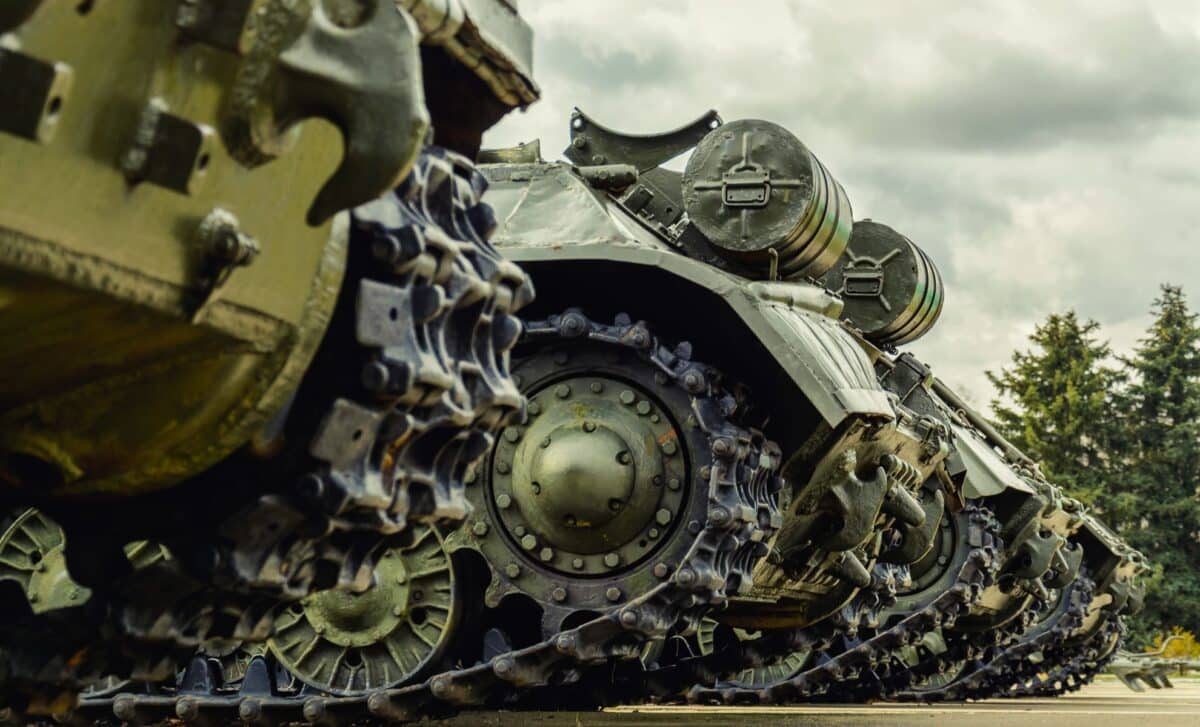
The United States Army has announced that it will begin testing prototypes of the next-generation M1E3 Abrams tank in the summer of 2026, five years earlier than originally scheduled. The accelerated timeline reflects a broader shift in defense acquisition strategy, emphasizing agility, modularity, and real-time soldier feedback during development.
500 Drones a Day: How Russia Plans to Overwhelm Ukraine’s Defenses
Modular Approach To Future Combat Vehicles
The M1E3 Abrams is designed as a modular combat platform, allowing different components, such as engines, transmissions, and active protection systems, to be swapped in and out depending on operational requirements or technological advancements. According to General Randy George, Chief of Staff of the U.S. Army:
“When a supplier comes in and says, ‘I have something better for active protection, a better engine, a lighter transmission to achieve the required performance,’ soldiers can simply, so to speak, plug it in and use it.”
This shift breaks with previous Army development cycles, which often delayed programs for years until all technical and risk-related issues were resolved. By contrast, the M1E3 strategy aims to reduce fielding time and increase adaptability to battlefield needs. Feedback from soldiers operating the prototype vehicles will guide adjustments and upgrades throughout the testing period.
US Army JUST unveiled the new M1E3 Abrams Main Battle Tank at the Detroit Auto Show!
— Christopher Wipper (@SGTWipper1Each) January 16, 2026
What do we think? pic.twitter.com/yWeukoGtFM
Collaborative Development Model
The M1E3 program also marks a break from the usual defense-contracting setup. Instead of leaning on a single prime contractor to handle everything, the Army is using what it describes as a “team of teams” model that brings together more than ten companies, mixing long-established defense players with more non-traditional suppliers.
As stated by Militarnyi In practice, that means different specialists own different chunks of the upgrade: Caterpillar is tied to engine development, SAPA to transmission systems, Recaro to crew seating, and General Dynamics to the external vehicle design drawing on earlier Abrams work. Other contributors include Moog for slip ring systems, Roush for vehicle integration and the crew compartment design, and American Rheinmetall for lightweight track components.
The advantage of this distributed approach is that it leans into specialization, which can support cost control and speed up how quickly commercial innovations get integrated into military systems, while also aligning with the Army’s broader goal of staying flexible and leaving room for incremental improvements over time.
Schedule, Test Phases, And Next Steps
Four M1E3 prototype units are scheduled to be delivered to field units for testing in 2026. These early trials will inform further refinements in vehicle performance, survivability, and maintainability. The Army’s acquisition chief, Brent Ingram, cautioned that while prototype testing is moving ahead quickly, the timeline for full operational capability and mass deployment is still under review.
Instead of aiming for a definitive rollout date, the Army appears focused on developing an iterative process. This would allow new technologies to be fielded when ready, rather than holding back the entire system for finalization. If successful, this could become a new standard for future military vehicle development.