
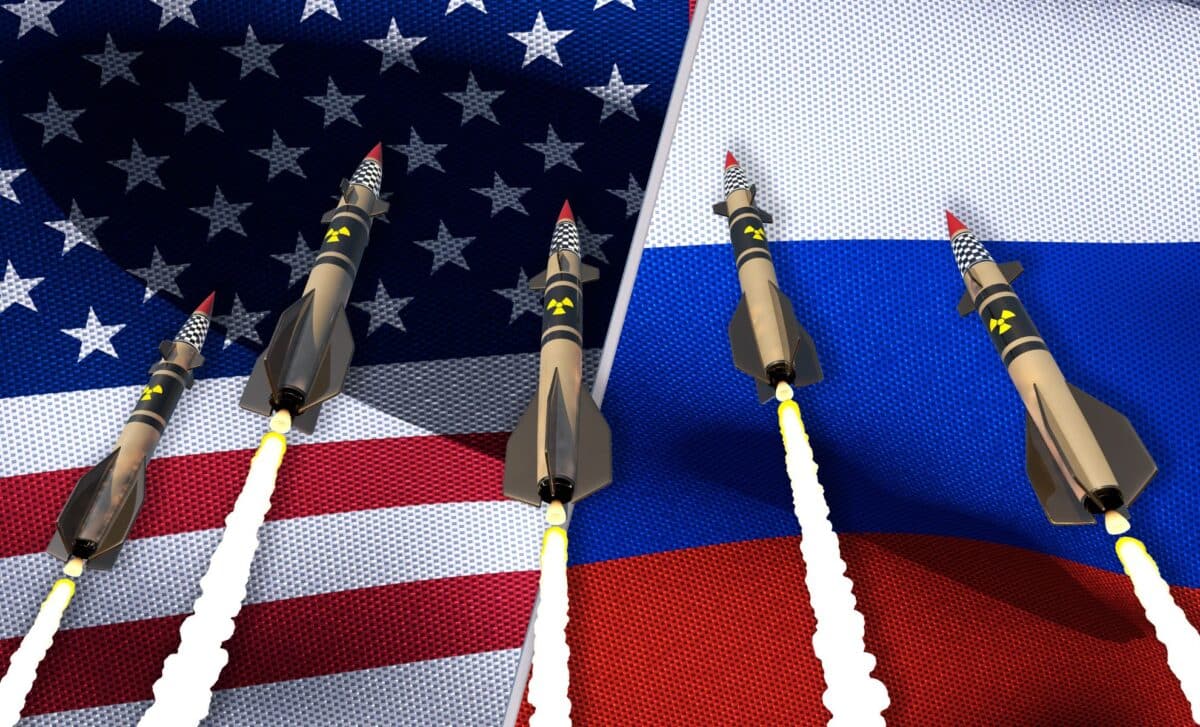
On February 5, 2026, the New START treaty officially expired, marking the end of the last binding agreement between the United States and Russia to limit their nuclear arsenals. Signed in 2010, New START was a critical element of the global effort to control nuclear weapons after the Cold War, but its expiration brings forth a series of new challenges for global security.
Norway’s $10 Billion Defense Boost: How It Plans to Take on Russia’s Military Might
New START: A Key Pillar in Nuclear Arms Control
The New START treaty, which came into effect in 2011, was designed to reduce and limit the number of deployed strategic nuclear warheads and delivery vehicles held by the United States and Russia. According to CNN, the treaty imposed strict limits: each country was capped at 1,550 deployed strategic warheads and 700 deployed delivery systems, including intercontinental ballistic missiles (ICBMs), submarine-launched ballistic missiles (SLBMs), and long-range bombers. The treaty also provided robust verification mechanisms, including on-site inspections and data exchanges, to ensure compliance and build mutual trust between the two nations.
For over a decade, New START played a crucial role in preventing a nuclear arms race, providing both transparency and predictability in the arsenals of the two largest nuclear powers. Its verification measures allowed the U.S. and Russia to keep each other’s nuclear capabilities in check, reducing the risk of miscalculations and misunderstandings that could lead to accidental escalation.
However, the landscape of global security has changed significantly since the treaty’s inception, and the expiration of New START brings with it uncertainties about the future of nuclear arms control.
Nuclear Proliferation: A Race for Destruction
With the collapse of the last major nuclear arms control agreement between the U.S. and Russia, both countries are now free to increase the size and capability of their nuclear arsenals without legal restrictions. While this does not necessarily mean that either country will immediately begin an all-out arms buildup, it does open the door to the possibility of an intensified nuclear arms race, particularly in response to the shifting geopolitical environment.
The end of New START could lead to a rise in nuclear proliferation, where both the U.S. and Russia might prioritize the development of new nuclear weapons systems. The lack of verification mechanisms increases the potential for misunderstandings between the two powers, as there will be no formal, reliable way to monitor the other side’s nuclear capabilities. This uncertainty could prompt a “security dilemma,” where both countries take steps to enhance their own security by developing more advanced nuclear weapons, even if they do not directly want to provoke one another.
Beyond the U.S. and Russia, the expiration of New START could also have global consequences. Nations that are already skeptical of the international nuclear disarmament process, such as North Korea and Iran, might use the treaty’s demise as justification for expanding their own nuclear programs.
Redefining Nuclear Arms Control in the 21st Century
The collapse of New START raises critical questions about the future of multilateral arms control efforts, especially in a world where nuclear weapons remain central to the strategic calculations of major powers.
Moving forward, the challenge will be rebuilding trust between nuclear powers and establishing new frameworks for arms control that address the changing geopolitical realities. Some experts believe that there is a need for a new treaty, one that includes more countries and focuses on modernizing and controlling emerging nuclear technologies, such as hypersonic weapons and cyber warfare.
However, this will require a significant shift in the current international relations dynamic, particularly as countries like China and others that have nuclear capabilities are not bound by the same treaties that once governed U.S.-Russia arms control.