

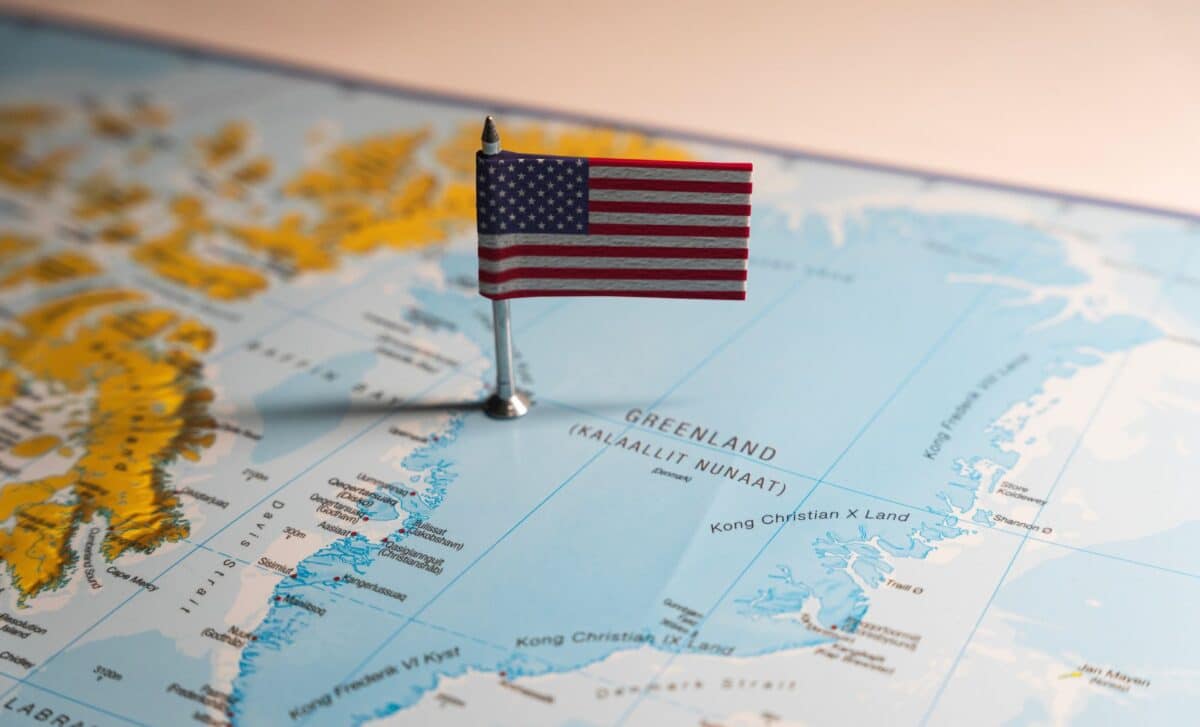
On January 21, 2026, during the World Economic Forum in Davos, the United States and Denmark jointly announced their intention to renegotiate the 1951 defense agreement that governs the American military presence in Greenland. This move comes amid growing international interest in the Arctic’s strategic value, with evolving military, environmental, and geopolitical factors reshaping priorities across the region.
The decision signals a shift in how Washington and Copenhagen view their long-standing cooperation in Greenland, a remote but increasingly vital territory whose importance has surged due to melting ice, new maritime access, and the rise of great power competition in the High North.
Orion 2026: The Massive Military Drill That Could Change Europe’s Defense Strategy Forever
A Cold War Pact Under Modern Pressure
Originally signed during the Cold War, the 1951 agreement was designed to allow the United States to establish and operate military facilities on Greenlandic territory, notably Thule Air Base, which played a major role in early warning systems and transatlantic defense. The pact explicitly affirmed Danish sovereignty while granting the United States operational flexibility, in return for transparency and prior coordination with Danish authorities and, since Greenland’s autonomy in 2009, Greenlandic authorities.
Though it was revised in 2004, the framework has not kept pace with the rapidly shifting Arctic environment. The accelerating ice melt has opened new navigation routes and unlocked potential access to critical natural resources, such as rare earth elements and fossil fuels, sparking increased attention from not only Arctic states but also powers like China and Russia. In this context, Washington sees the existing agreement as insufficient to address today’s challenges.
U.S. officials have described the planned renegotiation as a necessary step to modernize and clarify the terms of American presence in Greenland, positioning it within a broader effort to strengthen NATO’s northern flank and secure strategic footholds in the Arctic.
Danish And Greenlandic Red Lines On Sovereignty
According to BBC News, while the United States has emphasized the defensive and strategic rationale behind the renegotiation, Danish and Greenlandic leaders have publicly drawn firm boundaries around what is, and is not, on the table.
Danish Prime Minister Mette Frederiksen stressed that neither NATO nor its leadership has the authority to negotiate on behalf of the Kingdom of Denmark or its autonomous territories. She insisted that its sovereignty remains a core principle, not subject to reinterpretation under any revised deal.
Leaders in Nuuk, Greenland’s capital, echoed this stance. Greenlandic Prime Minister Múte B. Egede reaffirmed that the island’s territorial integrity and legal status are non-negotiable. He noted that while Greenland is open to dialogue on defense cooperation, any such discussions must be conducted respectfully and in full alignment with international law and Greenland’s autonomous rights.
This clear positioning reflects growing political confidence in Greenland, which has been increasingly assertive in shaping its external relations, particularly when they involve its land, resources, or future political status.
NATO’s Arctic Security Stakes
The renegotiation is not happening in isolation. It comes as NATO continues to reassess its presence and posture in the Arctic, following recent years of heightened Russian military activity in the region, and China’s growing interest in identifying itself as a “near-Arctic” stakeholder.
Analysts suggest that updating the U.S.-Denmark-Greenland defense framework could serve as a template for how Western allies structure Arctic defense cooperation while navigating complex sovereignty arrangements. The challenge lies in balancing military readiness with local autonomy, and ensuring that rising international involvement in the Arctic does not override the voices and interests of the people who live there.