

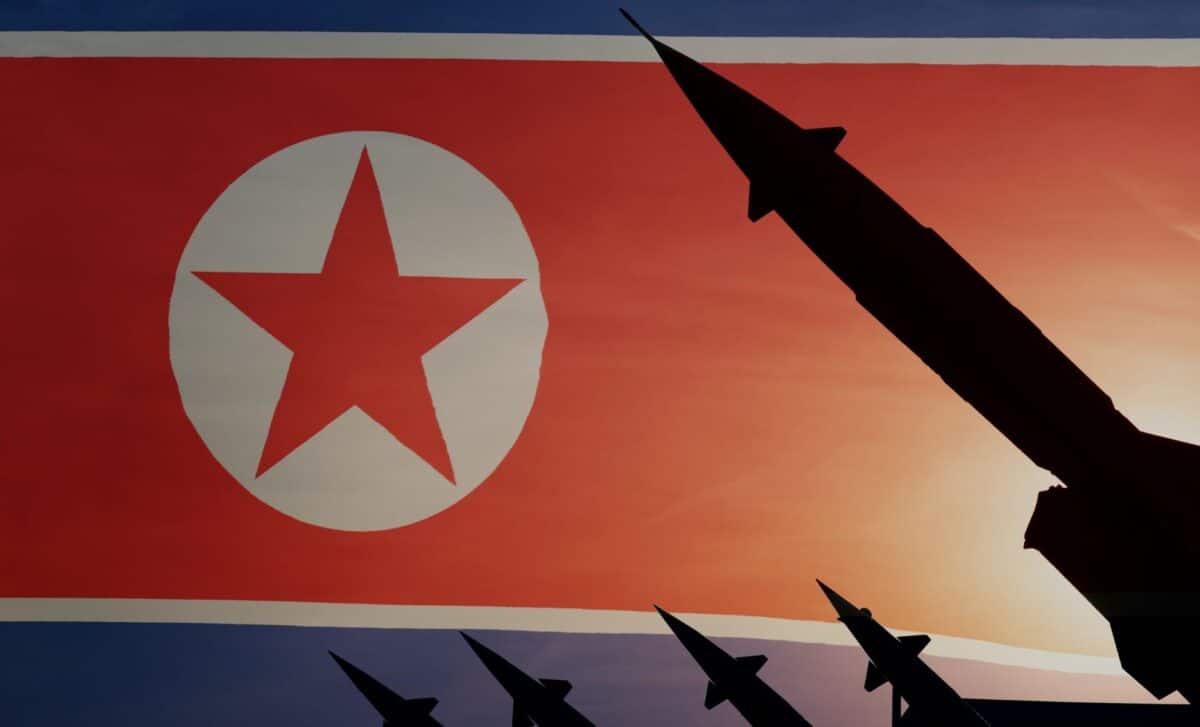
South Korea has issued a stark warning about North Korea’s accelerating nuclear weapons program. According to intelligence estimates shared publicly on January 21, 2026, Pyongyang now produces enough fissile material annually to manufacture between 10 and 20 nuclear warheads. This signals a major leap in the country’s weapons development, with regional and global implications.
The German Software Powering America’s Economy, And Why Europe Could Pull the Plug
Nuclear Output Signals Strategic Shift
For years, North Korea’s nuclear development was seen as intermittent, marked by sporadic tests and uncertain progress. That perception is changing. South Korean officials now describe a steady, industrial-level process that reliably yields significant quantities of enriched uranium and plutonium.
President Lee Jae Myung emphasized this point in a statement reported by France24, noting that the production is no longer symbolic or occasional. Rather, North Korea appears to have established a stable supply chain, secure facilities, and the ability to bypass international sanctions. This indicates that the country’s nuclear arsenal is set to expand continuously, not only in number but also in readiness.
These developments represent a strategic turning point. Instead of simply seeking to demonstrate nuclear capability, North Korea now seems intent on maintaining and scaling its arsenal as a core element of national defense policy.
Missile Advances Boost Warhead Reach
Alongside the growing stockpile of nuclear material, North Korea continues to advance its missile technology, particularly long-range systems. In early January 2026, multiple missile tests were conducted over the sea east of the peninsula. While not unprecedented, the timing and frequency of these tests suggest a deliberate effort to demonstrate progress in ballistic missile delivery systems.
According to South Korean and Japanese defense sources, North Korea’s current missile programs include models capable of reaching not only nearby countries, but potentially the continental United States.
“At some point, North Korea will have secured the nuclear arsenal it believes it needs to sustain the regime, along with ICBM capabilities capable of threatening not only the United States but the wider world,” he said.
The integration of warhead development with delivery systems shows that North Korea is moving toward a full-spectrum nuclear deterrent. Each missile test, according to analysts, is timed to maximize diplomatic pressure and signal strength during periods of international attention.
Growing Worry Over Nuclear Spread
Perhaps the most far-reaching concern raised by South Korea is the possibility that North Korea could export nuclear weapons or related technology. Once it achieves a self-declared “sufficient” arsenal, the regime may turn to international markets, especially given its isolation and long-standing economic constraints.
President Lee Jae Myung warned of this scenario, suggesting that a surplus of nuclear warheads could be monetized or used to influence foreign governments. North Korea has a documented history of exporting conventional arms, and this pattern could extend into the nuclear domain.