

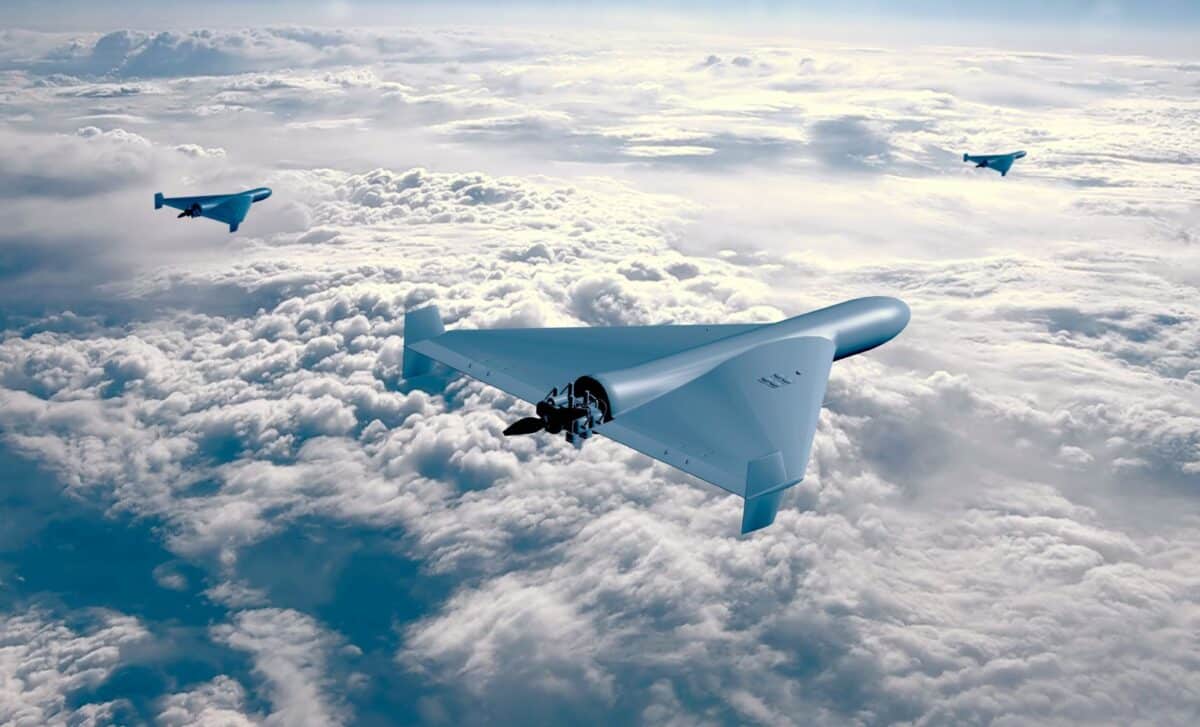
Russia has begun deploying Shahed drones equipped with new infrared (IR) lighting systems designed to interfere with enemy detection equipment. This recent modification, revealed during ongoing drone attacks in Ukraine, could make these unmanned aerial vehicles significantly harder to track, especially at night.
Atlantic Bastion: Britain’s New Weapon Against Rising Russian Threats Underwater
A New Layer of Stealth for Russian Drones
The change was first identified by Ukrainian military technology specialist Serhii Flash, who shared images showing visible IR lights mounted on the drones. The discovery, reported by Defense Express and confirmed by multiple defense analysts, points to an emerging Russian strategy aimed at defeating optical surveillance and air defense systems through simple but effective visual interference.
These “infrared lights”, as described in the reports, are designed to “perturb or blind enemy sensors,” particularly those relying on visual or thermal imaging. While the drones remain physically visible in daylight, the lights may reduce the effectiveness of night-based detection by flooding camera sensors and making it more difficult to lock onto a target in flight.
A Growing Test for Ukraine’s Aerial Protection
The modification could pose a serious challenge to Ukrainian forces, which rely on a mix of older and modern detection systems to intercept drone threats. Ukrainian helicopters and interceptor drones, some of which operate with legacy sensors, may struggle under conditions of high infrared interference.
This tactic may not render the drones completely invisible, but it complicates the timing and accuracy of response. Some modern Ukrainian systems, particularly those with thermal imaging filters or protected sensors, may still detect the drones, but with potentially reduced effectiveness or shorter reaction windows.
The shift is especially relevant given the frequency of Russian drone strikes. Kyiv has reported near-daily attacks, many involving the Shahed drones, and any loss in detection capability, even temporary, can have real operational consequences on the ground.
Ukraine’s Evolving Countermeasures
Despite the technical challenges, Ukraine continues to adapt. In several regions, up to 40% of incoming drones are being intercepted, thanks to a layered defense network that includes helicopters, interceptor drones, and electronic countermeasures. These efforts reflect a strategic focus on mobility and flexibility in responding to rapidly changing aerial threats.
Still, the introduction of infrared disruption means these interception tactics may need urgent updates. Helicopters using older visual sensors may be especially vulnerable, and even advanced systems could require software or hardware tweaks to compensate for the new interference patterns.