
Recent claims from Ukrainian defense officials suggest that Russian forces may have used the Starlink satellite network to control Shahed drones during a January 2026 attack. If accurate, this would represent a major shift in drone warfare, introducing more advanced connectivity into battlefield operations.
Russian Military Upgrades Assault Rifles For Anti-FPV Drone Missions
New Report Raises Concerns Over Drone Connectivity
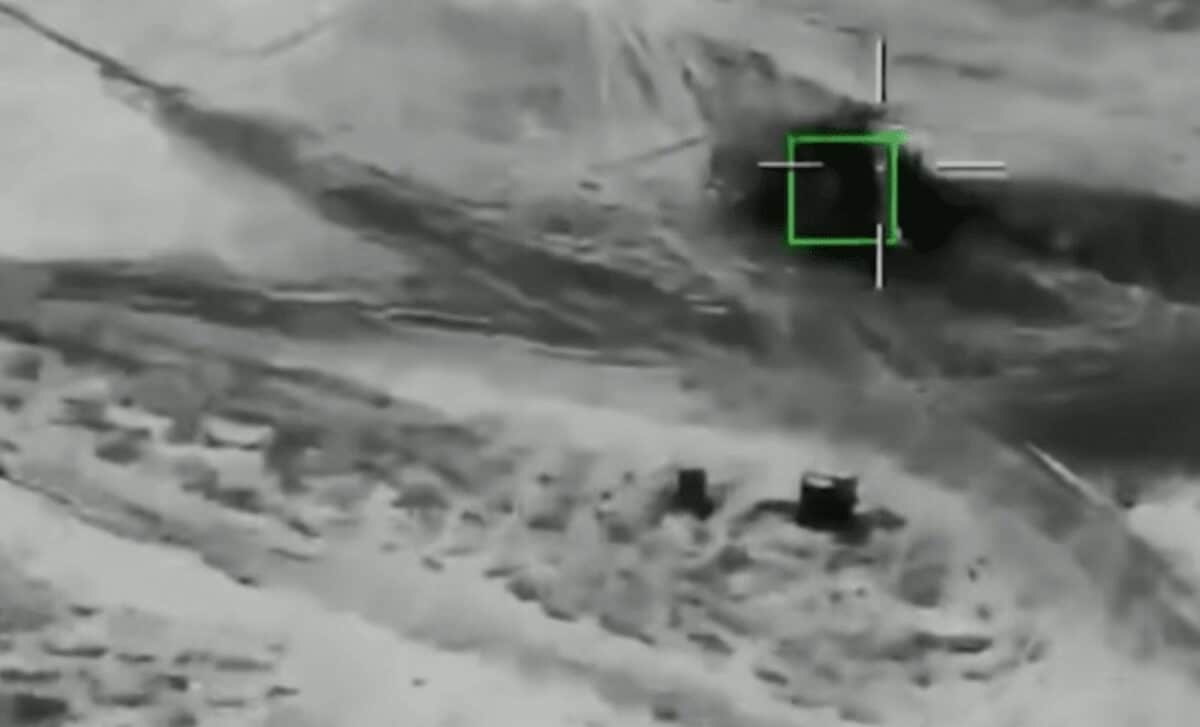
On January 25, 2026, Serhiy Beskrestnov, Ukraine’s recently appointed adviser on defense technologies, published a message on Telegram stating that Shahed drones, used by Russian forces, may have been guided using Starlink. The alleged incident is linked to an airstrike on Kropyvnytskyi, a district in central Ukraine, the day before.
As stated by United24media, Beskrestnov described a video showing what he referred to as “the first use of Shaheds equipped with Starlink.” He added,“We see automatic target acquisition and manual guidance using live video. But there were no UAVs nearby to create a mesh radio network. I conclude that we are seeing the first use of Shaheds controlled via Starlink.” The post quickly gained attention, reaching over 170,000 views.
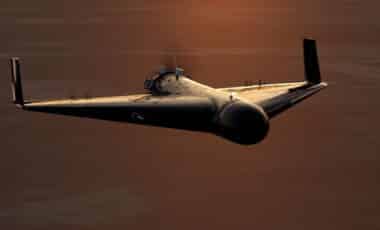
Shahed drones, manufactured in Iran and referred to as Geran-2 in Russian military terminology, were originally guided by GPS and inertial navigation. With an estimated range of several thousand kilometers, these drones are designed for long-range attacks. The integration of satellite internet, if confirmed, would significantly enhance their ability to adapt to changing battlefield conditions mid-flight.
Implications For Electronic Warfare And Air Defense
One of the central concerns raised by Ukrainian experts is that Starlink-enabled drones could be far more resistant to electronic countermeasures. Conventional Shahed drones have previously been found with components such as 4G modems and SIM cards, which allow limited real-time control. In contrast, Starlink provides high-bandwidth, global coverage that could bypass ground-based jamming systems.
Beskrestnov emphasized that drones with such capabilities would be extremely difficult to intercept, as Ukraine’s current electronic warfare tools are designed to disrupt radio-based or cellular signals. The possibility that Russian forces have adapted Starlink to guide drones through contested airspace raises new challenges for Ukrainian air defense units, particularly helicopter teams tasked with intercepting these drones.
On January 4, 2026, Ukrainian forces successfully shot down a Geran-2 drone. Incidents like this illustrate that interception remains possible, but the growing sophistication of drone systems could change that calculus. The shift to satellite-controlled platforms could give operators real-time situational awareness and more accurate targeting, even during active engagements.
Unauthorized Deployment?
SpaceX, which operates the Starlink network, has previously stated that its service is not authorized for offensive military use. The company has not commented on these specific allegations. It remains unclear how Russian units would have acquired and activated Starlink terminals, which are typically geo-fenced and restricted by region.
If confirmed, the incident raises broader ethical and legal issues surrounding the use of dual-use technologies in warfare. As commercial tools become increasingly integrated into military operations, questions about accountability, export control, and misuse become more urgent. Independent verification will be needed to assess the validity of Ukraine’s claims and to understand the extent of Starlink’s role in current battlefield dynamics.