

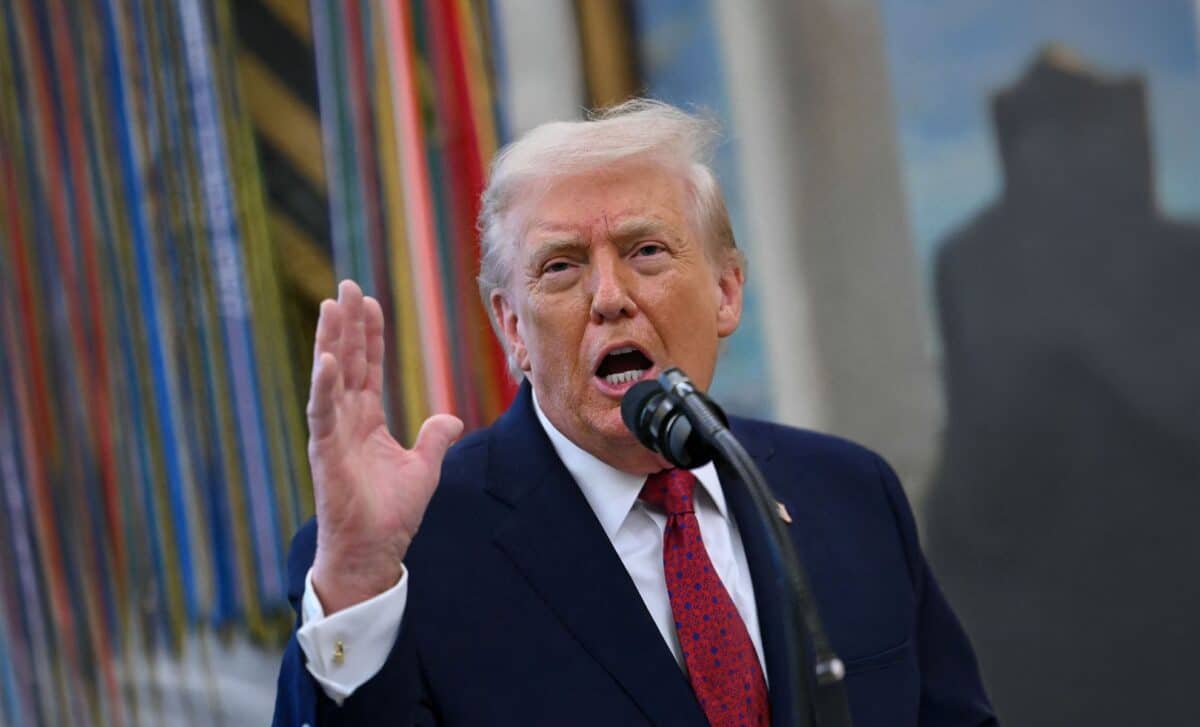
A letter attributed to Donald Trump and shared with European diplomats outlines a major shift in US foreign policy priorities. The message positions Greenland as a critical national interest and questions long-standing diplomatic norms, including multilateral cooperation and the role of peace as a strategic objective.
“Dangerous and Inexplicable”: Russia’s Latest Strike Has the World on Alert
Greenland Becomes a U.S. Priority
According to the letter, reportedly addressed to Norwegian Prime Minister Jonas Gahr Støre, Trump asserts that “The World is not secure unless we have Complete and Total Control of Greenland.” In this framing, the island is no longer a peripheral territory but a central asset in the US security strategy.
The former president directly questions Denmark’s capacity to defend Greenland, stating it cannot protect the island from powers like Russia or China. This raises doubts about the effectiveness of regional sovereignty in Arctic affairs and signals a broader shift in US confidence toward traditional allies.
Trump also challenges the legal and historical basis of Danish authority, noting there is “no written document” proving ownership. He refers to alleged early American landings to support a claim of historical equivalence.
Peace, Only if Recognized
The letter includes a reference to the Nobel Peace Prize, criticizing Norway for not awarding it to Trump for what he describes as the end of “eight wars and more.” He writes that he no longer feels obligated “to think purely of Peace” as a result.
This passage marks a notable shift. Peace is no longer described as a fundamental objective but as something conditional on symbolic validation. Trump emphasizes that peace will remain “prominent,” but only alongside policies he considers beneficial for the United States. This perspective introduces a transactional view of diplomacy, where values are contingent rather than foundational.
Addressing the letter to the leader of the country hosting the Nobel Committee adds a symbolic dimension, linking a personal grievance to a strategic position shift.
NEW: @potus letter to @jonasgahrstore links @NobelPrize to Greenland, reiterates threats, and is forwarded by the NSC staff to multiple European ambassadors in Washington. I obtained the text from multiple officials:
— Nick Schifrin (@nickschifrin) January 19, 2026
Dear Ambassador:
President Trump has asked that the…
NATO Presented as Owing Strategic Return
Trump also refers to NATO, claiming he has done more for the alliance than anyone “since its founding.” He suggests that NATO should now “do something for the United States.” This language introduces a quid pro quo framework at odds with the alliance’s mutual defense principles.
In sharing the message with multiple European ambassadors, the communication takes on wider political significance. It appears to serve not only as a bilateral exchange but also as a test of transatlantic cohesion under evolving US leadership priorities. The letter suggests that longstanding alliances are being reassessed through the lens of perceived national returns.