
Germany has approved the acquisition of American MQ-9B SeaGuardian drones as part of a sweeping €50 billion defense modernization initiative. Aimed at rapidly strengthening surveillance and operational capabilities, the move comes amid heightened geopolitical tensions in Europe. While it supports Germany’s immediate military objectives, the decision raises doubts about its continued commitment to the Eurodrone program, a joint project with France, Italy, and Spain.
By choosing a U.S.-made system over a European alternative still in development, Germany may be signaling a shift in priorities that could affect the future of Europe’s defense cooperation and technological sovereignty.
Bundestag Approves Major Defense Investment Package
On December 17, Germany’s Budget Committee authorized 30 new defense programs worth €50 billion. These are part of a long-term overhaul of the Bundeswehr, aimed at improving its operational readiness across multiple domains.
This funding adds to an anticipated €87.2 billion defense budget for the upcoming year, along with a €25.5 billion special fund. In total, Germany has approved €83 billion for 103 defense-related initiatives over the past twelve months. Space investment alone will represent €35 billion by 2030.
“I Thought It Was Over” : Boeing 757 Makes Emergency Landing After Engine Fire
Air, Land, and Space Programs Gain Momentum
Recent procurement includes 20 Eurofighter EF-2000 (T5 standard) aircraft (€3.75 billion) and several hundred new armored vehicles such as the Schakal, Luchs 2, and SpähFz NG, valued at around €8 billion. New systems for artillery and air defense munitions were also included.
Ground forces will receive updated Boxer and Puma infantry vehicles, as well as new-generation CAVS transports. In the air, Germany will begin serial production of the Taurus Neo air-to-surface cruise missile.
In space, Germany is backing the SPOCK satellite system with €1.76 billion in funding. Developed jointly by Rheinmetall and Finnish firm ICEYE, the platform is designed for persistent operational tracking and is considered a priority by the Defense Ministry.
American Drone Acquisition Signals Strategic Shift
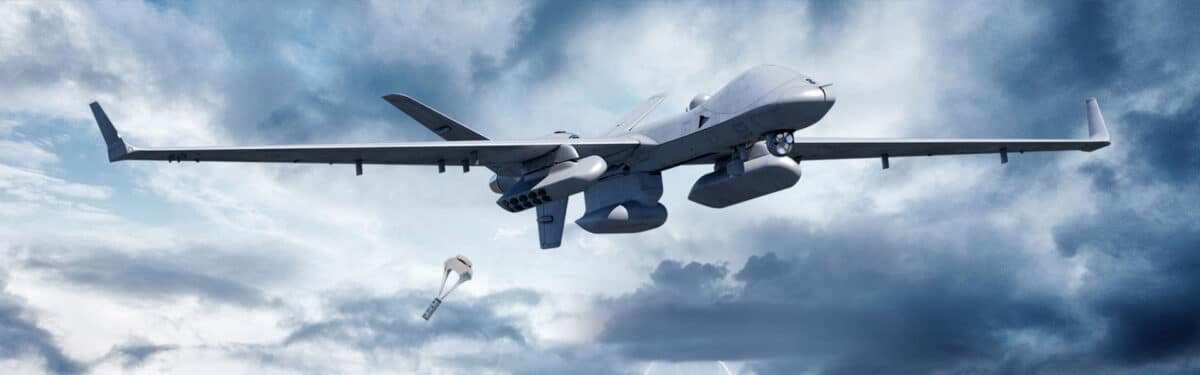
Among the newly approved projects, the acquisition of MQ-9B SeaGuardian drones from General Atomics stands out. These unmanned aerial vehicles are intended for long-range surveillance and anti-submarine warfare, and will support Germany’s growing fleet of P-8A Poseidon maritime patrol aircraft. One Poseidon has already been delivered, and the order may expand to 12 units.
This move marks a significant shift, as Germany is also a lead partner in the Eurodrone project alongside France, Italy, and Spain. Choosing American drones at this stage is seen by some observers as a potential weakening of the European program’s strategic and industrial relevance.
european defense integration faces renewed challenge
The decision has sparked questions about Germany’s long-term commitment to cooperative European defense programs. The Eurodrone was intended as a central pillar of European autonomy in unmanned aerial systems, and the recent shift toward U.S. technology could impact its viability.
The MAWS (Maritime Airborne Warfare System), another joint project with France, could also be affected by this procurement strategy. As Germany prioritizes near-term capability through off-the-shelf solutions, the balance between national readiness and European industrial development appears increasingly difficult to maintain.