
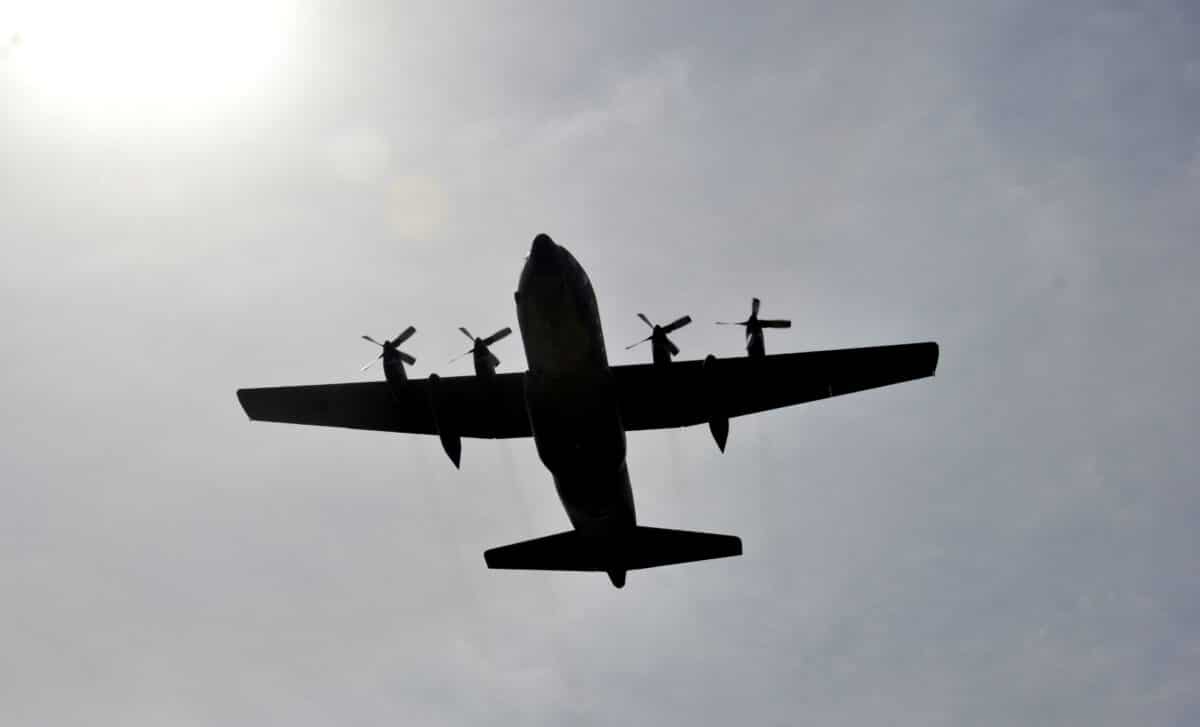
Mexico has officially received its first C-130J-30 Super Hercules, becoming the first country in Latin America to operate this modern tactical transport aircraft. Built by Lockheed Martin, the delivery marks a significant upgrade to the Mexican Air Force’s logistics and humanitarian response capabilities after decades of relying on older C-130 models.
400,000 Civilians, Guerrilla Warfare, Drones: Canada’s Plan for a U.S. Assault
Rapid Response Airlift
The C-130J-30 is the extended variant of the widely used C-130J Super Hercules, offering an additional 15 feet (4.5 meters) of cargo space compared to the standard model. This enhancement enables greater transport of troops, equipment, and supplies, improving mission readiness across both military and civilian disaster response scenarios.
Historically, the Mexican Air Force has used legacy C-130 Hercules aircraft to support missions ranging from earthquake relief and hurricane response to military logistics in remote regions. With the new J-30 variant, Mexico now gains increased range, payload capacity, and fuel efficiency, offering more flexibility for national and regional operations.
As reported by The Defense Post, Lockheed Martin stated that the aircraft’s proven track record in more than 25 countries ensures continued reliability, while the familiarity of Mexican personnel with older Hercules models will ease the transition to this more advanced version.
Integration Into A Growing Global Fleet
Mexico joins a fleet of over 560 C-130J aircraft operating across 25 countries, including the United States, Australia, and several NATO members. This move reflects Mexico’s intention to align more closely with international standards in airlift capability and defense logistics.
The acquisition agreement, signed in 2025, is part of Mexico’s broader push to modernize its aerospace and defense infrastructure. According to Lockheed Martin, existing support systems, such as maintenance hangars and trained crews, will reduce implementation delays and allow the aircraft to enter service more quickly.
The delivery comes at a time when the Mexican military is seeking to improve both response speed and operational coverage, especially in remote or disaster-prone areas. The aircraft is expected to become a key tool in humanitarian missions, as well as national defense tasks requiring rapid mobility.
Boosting Defense Modernization
Beyond the new aircraft, Mexico is investing in a broader set of military modernization efforts. These include plans to enhance radar surveillance systems, particularly in the southeast of the country, where unauthorized air traffic remains a significant challenge.
Authorities have also announced the construction of two multipurpose support vessels for use in humanitarian and logistical missions at sea. Estimated at around $116 million, these ships are intended to improve sealift operations and provide flexible support in both disaster and defense operations.
The integration of the military plane complements these developments by reinforcing Mexico’s ability to conduct long-range missions, respond to emergencies, and cooperate more effectively with international partners.